
Whether it’s turning napkin sketches into built work, carving blocks of snow into sculptures, or helping a neighborhood brewery find its footing, Jeremy Rudd loves the part of the job where ideas become reality. As McCullough’s new Master Display Fabricator, he’ll translate design concepts into three-dimensional exhibits.
MONTGOMERY: Welcome to McCullough. As Master Display Fabricator, what will you be doing day to day?
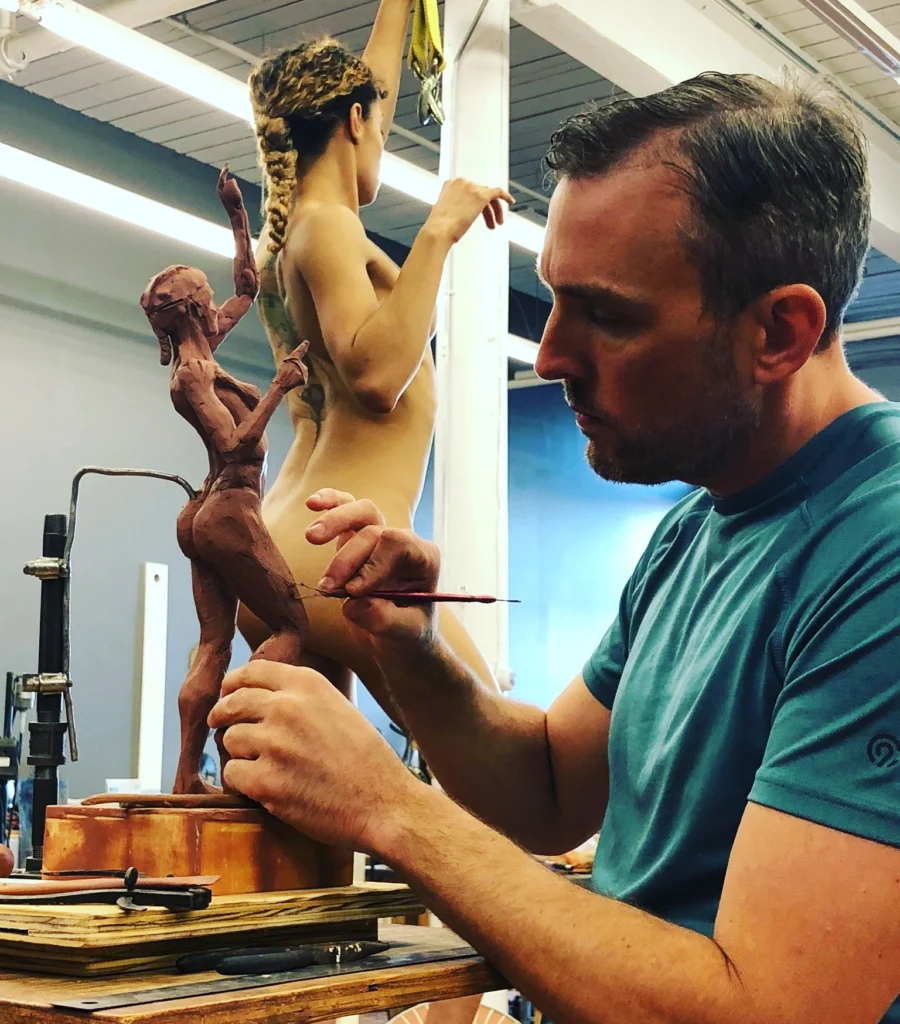
JEREMY: The primary task is to transition between the design team and the fabrication team—taking the really cool ideas and designs and figuring out how to translate them into three-dimensional objects that could be built by someone. Engineering, structural stuff, material handling, surface treatments. Really pulling ideas into the real world.
MONTGOMERY: What excites you about that opportunity?
JEREMY: My favorite part of every project is taking the napkin drawing or the concept from clients and figuring out how to make it in real life. I like the unknown and the figuring-out part. Here, because of the wide breadth of clients, every project has something a little new to solve—and that’s what excites me.
MONTGOMERY: Tell me about your path to this point.
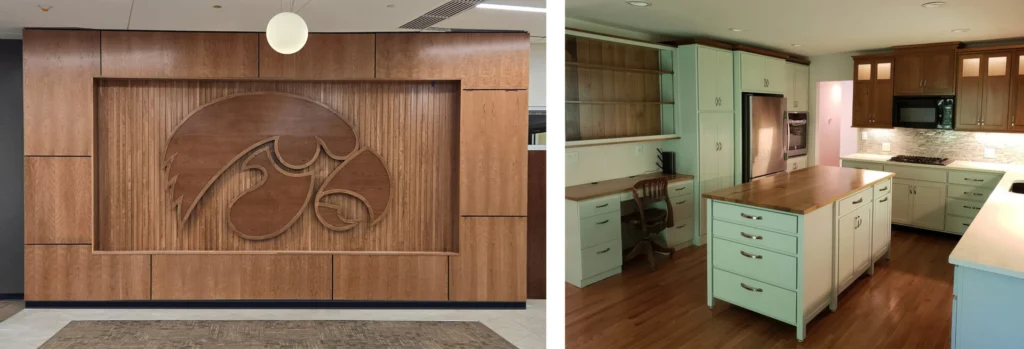
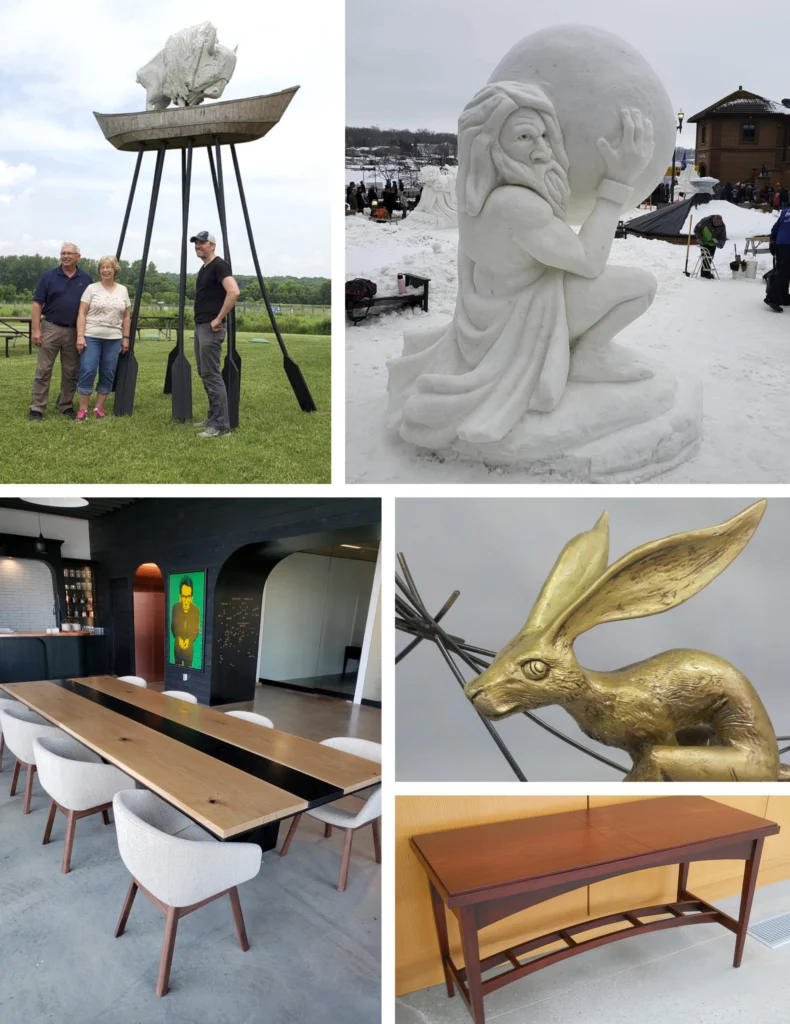
JEREMY: I came from a family of makers—my dad was a welder, my mom did crafts. I started college in computer engineering at Iowa State, got into the College of Design, then grad school in Massachusetts for sculpture and got my MFA. I taught at four colleges, covering everything from art history to sculpture, furniture design, and hands-on practicum courses. Alongside teaching I ran my own studio—custom furniture, liturgical work for churches, commercial design and fabrication.
MONTGOMERY: Any standout projects from your own studio?
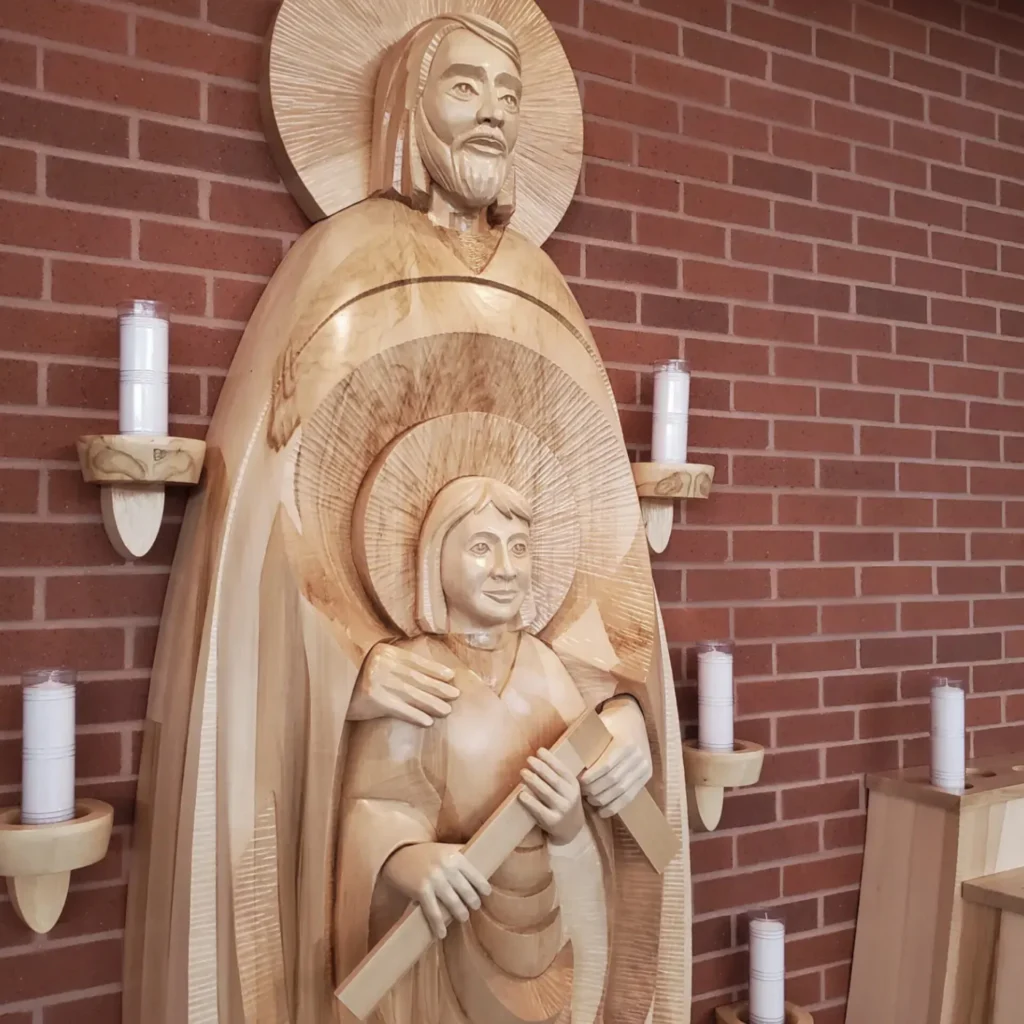
JEREMY: When I was teaching at Divine Word College, I did liturgical work for local parishes—St. Elizabeth Ann Seton in Hiawatha is a big one. I was basically their artist-in-residence for 15 years. I sculpted a full-size statue of Mary and one of Jesus and Joseph. On the commercial side, custom millwork and cabinetry. And public art—it isn’t always lucrative, but I really like making art for outdoor spaces.
MONTGOMERY: Tell me about Jubeck New World Brewing.
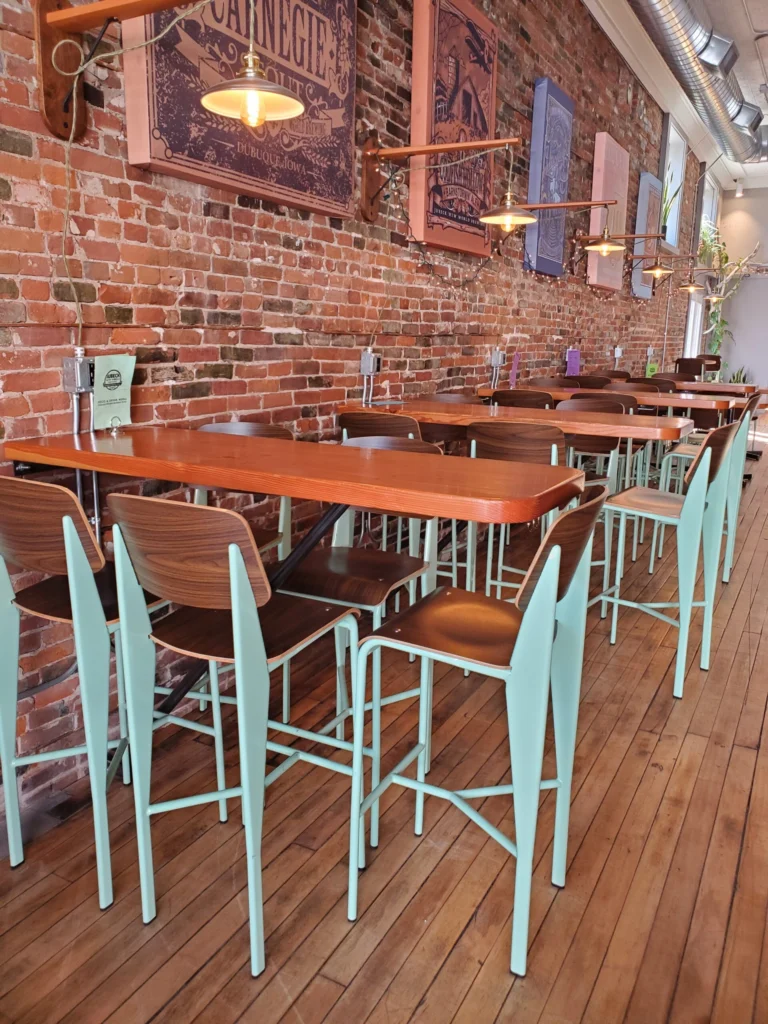
JEREMY: I became a part owner because of the build-out. Eleven years ago they got some big planks from the Millwork District and needed someone to turn them into a bar. I built the original bar and tabletops. Later, when they needed to expand, I designed and built out the new space—cabinetry, tables, finishes. It was a soup-to-nuts project and it’s rewarding to see people enjoy that place now.
MONTGOMERY: One of our production artists, Rachel Spurling, knows you from snow sculpting. She mentioned you two have gone head-to-head.
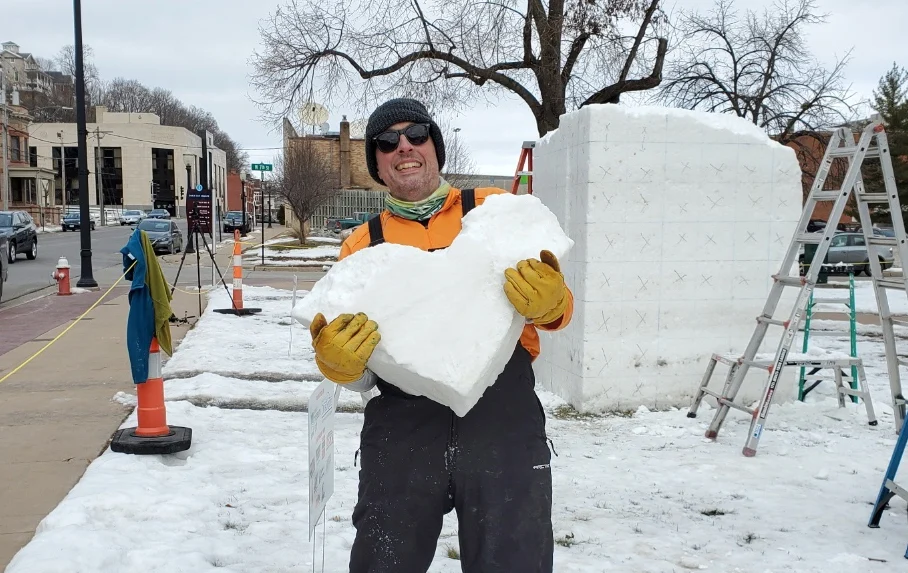
JEREMY: (laughs) I taught Rachel and another student how to carve; we carved together a couple years and then became opponents. Snow carving is brutal—cold, hard work, material that doesn’t want to cooperate—but it’s great teamwork and teaches you planning. I’m really excited to work with her again.
MONTGOMERY: You’ve been on your own a long time. What excites you about being part of a team again?
JEREMY: I like ideas. I missed having a room full of creative people. Collaboration reduces stress because you have people to bounce ideas off of. I like that McCullough is a tight-knit team that doesn’t let each other fail.
MONTGOMERY: Tell me about your family and what keeps you busy outside of work.
JEREMY: I’m married to Christina—going on 25 years—and we have three daughters: Addie, Emily, and Lucy. I grew up on a farm in Iowa. My wife and I are into trail running—we did the 100K at the Mines of Spain two years ago. I like being outdoors; it keeps me balanced and inspired.

MONTGOMERY: What should clients know about working with you?
JEREMY: I see my skill set as a translator. People have ideas but not always the vocabulary to describe them. I take their concepts and turn them into objects that can live in space and communicate what they want. I want to focus my time on work that has meaning and helps clients tell their stories.
“I see my skill set as a translator. People have ideas but not always the vocabulary to describe them.”
Jeremy Rudd, Master Display Fabricator